
How Weather-Related Car Accidents Are Handled Under North Carolina Law
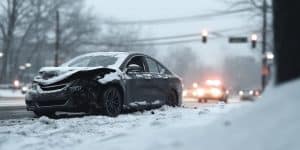 According to the United States Department of Transportation, roughly 12% of all reportable car accidents are classified as “weather-related.” Rain, fog, sleet, snow and ice – common as they are in this part of the country – can all pose major safety risks to drivers and pedestrians and contribute to an increased likelihood of a dangerous crash.
But just because a crash occurs in bad weather doesn’t mean it’s automatically a weather-related accident. Negligence and recklessness can still rear their ugly heads in these accidents, leading to complex questions about what really caused a crash and who should be held responsible. Here’s a quick explanation of how poor weather conditions can impact North Carolina car accident claims and an overview of the other factors that can affect liability in these cases.
How weather conditions affect roadway safety
In 2023, drivers reported over 280,000 traffic accidents across the state of North Carolina. Based on national statistics, it’s reasonable to estimate that almost 33,000 of those accidents were caused or impacted by weather conditions in some way. Anyone who’s ever spent time driving in a thunderstorm or squelching through slushy streets probably understands how big of a difference the weather can make in their daily commute.
Weather conditions in and of themselves can directly impact roadway safety in many different ways. For example, rain can reduce tire traction, fog can curtail visibility and ice can render a driver completely unable to control their vehicle. But these conditions aren’t the only things that make weather conditions relevant in car accident claims.
Driver behaviors and mechanical issues can also play a role when crashes occur in less-than-desirable conditions. Some examples of weather-influenced crash contributors include:
- Driving too fast for weather conditions
- Following too closely on slick streets
- Worn-out tire treads
- Old or faulty windshield wipers
- Reckless driving behaviors like abrupt lane changes or brake checking
- Failure to use headlights
When the weather takes a turn, drivers are expected to exercise reasonable care to protect themselves and those around them from harm. If a driver fails to use good judgment in bad weather or did not ensure their vehicle was in good working order prior to hitting the open road, they may be considered liable for any collisions they cause.
How fault is determined in weather-related accidents
When a crash occurs in bad weather conditions, there’s a tendency for drivers to just write it off as a freak accident. If you dig a little deeper, however, you’ll likely find that weather conditions weren’t necessarily the only contributing factor to many of these crashes.
In North Carolina, fault for car accidents is typically contingent upon findings of negligence. In layman’s terms, this means you have to show that another driver directly caused your crash by breaching their legal duty of care. If, for example, they violated traffic laws or didn’t perform necessary vehicle maintenance, they may be considered legally responsible if these lapses cause an accident.
Weather conditions can complicate these determinations, though, because the bar for what constitutes reasonable care may look different in different weather scenarios. Speed limits are a great representation of this, as driving the posted speed limit on a normal day is totally acceptable, while driving the posted speed limit in the middle of a snowstorm may constitute negligence.
This is why it’s important to consider the totality of the circumstances surrounding a crash rather than attempting to make fault assessments in a vacuum. Insurance companies, car accident attorneys and – in some cases – judges and juries need to review all the facts of a case in order to make an informed decision about who was really to blame. While some investigations may conclude that no driver breached a duty of reasonable care despite hazardous weather conditions, others quickly uncover evidence of negligence on the part of one or more involved parties.
Evidence in car accident investigations
To help piece together all of the elements that likely contributed to a crash, investigators and insurance adjusters must review and analyze all the data and evidence they have at their disposal. Some of the most common types of evidence evaluated in these cases include:
- Weather data from the time of the crash
- Visual evidence of road conditions from the scene of the accident
- Photo and video evidence of property damage, roadway hazards and relevant vehicle conditions
- Vehicle black box or event data recorder (EDR) information, where applicable
- Police reports
- Eyewitness statements
- Dashcam and surveillance footage
- Vehicle maintenance records
- Involved parties’ driving records
All of this evidence can help paint a clearer picture of how a crash unfolded and whether any factors other than the weather directly contributed to the accident. If there is any question whatsoever about whether another driver’s negligence or recklessness might have caused your crash, you should move as quickly as possible to consult with a car accident attorney who can help you access, gather and leverage the evidence you need to make a strong claim.
How does contributory negligence affect accident claims?
North Carolina adheres to a very strict contributory negligence rule when assigning fault for car accidents. Under this system, a driver who is found even slightly negligent may be barred from recovery (subject to limited exceptions such as the last clear chance doctrine). It doesn’t matter if you were 1% responsible or 100% responsible – you may be barred from recovering damages under North Carolina’s contributory negligence rule.
This represents another unique challenge for drivers involved in weather-related crashes. If an insurance company thinks you contributed in any way to your weather-related accident, they may refuse to pay out on your claim. They might say that you hydroplaned in a storm because you were driving a little too fast or that your visibility was impaired on a foggy day because you didn’t have your defrost setting turned on. If they can prove that any of these factors played a role in your crash, you may be deemed responsible for your own accident-related losses.
This is where having an experienced North Carolina car accident lawyer becomes your best bet. In addition to gathering evidence and communicating with insurance companies, your attorney can challenge unsupported or overstated claims of contributory negligence and help you safeguard your right to compensation.
What you have to prove
If you suspect that another driver’s negligence directly contributed to your accident, there are a few things you’ll need to prove in order to hold them accountable. First, you must show that the other driver owed you a legal duty of care in some way. Traffic laws can help to define this duty of care, but there is still some subjectivity involved around drivers using their best judgement in hazardous weather conditions, among other things.
You must also be able to show that the other driver clearly violated their legal duty of care in some way. Exceeding posted speed limits, not maintaining windshield wipers, driving recklessly and a variety of other behaviors may constitute a breach of care, but you’ll have to prove that these things actually occurred in order to make a claim.
Finally, you have to show that the other driver’s breach of care directly caused your accident and any resulting damages. If you can’t draw a clear line from a driver’s breach of care to, say, your broken arm, you may have a difficult time holding them legally responsible for your medical bills or other expenses.
Final thoughts
Weather may serve as a factor in many car accidents, but that doesn’t automatically make it the primary cause. Everyone on North Carolina roads has a responsibility to ensure the safety of those around them, and failing to adapt to dangerous weather conditions may constitute a breach of a driver’s legal duty of care.
At Price, Petho & Associates, we understand the nuances involved in determining fault in seemingly weather-related accidents – particularly under North Carolina’s contributory negligence system. We know how much insurers love to go back and forth about who was or was not at fault and how easy it is for involved parties to deflect blame based on weather conditions.
If you or a loved one was injured in a car accident and you think writing it off as simply weather-related isn’t telling the full story, give us a call today or fill out our online contact form to schedule a free consultation with a member of our team. We can help you explore all the factors that may have contributed to your crash so you can make a confident decision about where to turn in your fight for accountability.

Attorney Doug Petho is the owner and founder of Price, Petho & Associates. His primary focus is the litigation of plaintiff’s personal injury suits, and he has successfully tried hundreds of cases to jury verdict involving car accidents, trucking accidents, pedestrian accidents, slip and fall accidents, and work-related accidents. Contact his office in Charlotte today.