
The Dangers of Brake-Checking in North Carolina
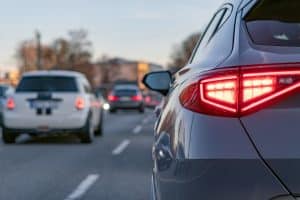 Drivers can become frustrated or angry with other drivers, and when this happens, some people can lose their temper and engage in risky behaviors like tailgating, cutting others off by engaging in dangerous lane changes, or, in some cases, by slamming on their brakes so that a vehicle following them will have to brake hard and suddenly to avoid a rear-end collision.
This last activity is commonly known as “brake-checking.” Brake-checking may constitute reckless driving under North Carolina law. When brake-checking leads to a rear-end collision, it can result in physical injuries, mental and emotional harm, and property destruction and damage. In a worst-case accident, brake-checking can lead to a wrongful death claim.
Price Petho & Associates represents people who have been harmed in North Carolina motor vehicle accidents, including collisions that result from brake-checking incidents. In this blog post, we examine brake-checking personal injury claims, including how they arise, who is potentially liable, and the injuries that can occur, and what you may be able to recover in an insurance settlement or personal injury lawsuit.
If you have been involved in a brake-checking accident in North Carolina, call our law offices today to speak to an attorney.
What is brake-checking?
Brake-checking is a slang term used to describe one driver suddenly slamming on the brakes of his or her vehicle with the intention of causing the driver following that person to have to do the same to avoid a rear-end collision.
You can think of brake-checking as a form of “road rage” behavior. It is often an expression of a driver’s irritation, frustration, or anger at the other driver. Brake checking is intentional or reckless behavior behind the wheel. It is not accidental or an attempt to check the function or condition of one’s brakes. As such, brake-checking may be prosecuted as reckless driving under North Carolina law, and if it leads to an accident of any kind that leads to harm is actionable in civil court.
How does brake checking cause car accidents?
As you may imagine, the most common way brake-checking can cause a traffic accident is if the following driver cannot slow down or stop in time to avoid striking the rear of the brake-checkers’ vehicle. Sometimes, causing a rear-end accident is the intent of the brake-checker, who may believe that any such accident is always the fault of the following driver, and the law will see the brake-checking driver as the true victim in the incident.
But brake-checking can also lead to accidents in other ways. These include:
- Loss of control of either vehicle. This is especially risky when road conditions are wet or slippery.
- Multi-vehicle accidents. Brake checking can cause a chain reaction of sudden “panic stop” braking in which multiple vehicles are involved in a crash.
How do you prove brake-checking happened in an accident?
One of the challenges to proving a brake-checking accident claim is that, in the absence of corroborating evidence, proving who was at fault can turn into a “He said, she said” contest of conflicting accounts between the drivers involved. The following driver claims brake-checking led to the accident, while the driver in front claims that no such thing occurred and that the following driver was tailgating.
Therefore, gathering evidence to support your version of what happened is key to supporting your case if a driver brake-checked you.
Here are two kinds of persuasive evidence that can help in proving your claim:
- Witness testimony. If other drivers or passengers, or pedestrians, or anyone else nearby saw the brake-checking behavior, then their testimony can help establish whether brake-checking occurred.
- Video evidence. If you have a dashcam in your vehicle, or if there was another camera, like a security camera, that recorded the collision, this is another way to reveal what happened to cause the accident.
Who is liable in a brake-checking accident?
Most of the time, brake-checking is a deliberate act.
As we stated above, sometimes a driver ahead of you will purposefully try to cause a rear-end accident in the hope of pinning the blame on you for it. Not only is this possible in some road-rage scenarios, but people may also engage in this conduct as part of an insurance claim scam.
Can brake-checking be the result of recklessness or negligence?
Not every driver who suddenly brakes in front of you does so with the intent of causing you to have to try to avoid an accident. But sometimes circumstances can still cause the driver in front of you to suddenly hit the brakes and effectively put you in the same situation.
For example, the driver in front of you may be distracted by texting while driving and not realize until the last second that he or she is rapidly overtaking the vehicle ahead and then suddenly hits the brakes.
An incident like this may not be brake-checking in its pure form; the driver ahead of you is not thinking of you when the sudden braking happens. But it can still lead you to be involved in a rear-end collision or to otherwise lose control of your vehicle.
In a situation like this, if the other driver’s careless behavior leads to you getting into an accident, then you can still have a car accident claim against that driver even if it does not involve brake-checking. Also, if a third party causes the driver ahead of you to engage in a panic stop that causes you to get into an accident, then that third party may also share in possible fault and liability in a personal injury claim.
How long do I have to file a car accident claim in North Carolina?
Under North Carolina law, you have three years from the date of your accident or injury to file a civil court claim for personal injury. In some cases, the statute of limitations may run from the date the injury was discovered or reasonably should have been discovered.
Failure to file a claim within the statutory period could prevent you from collecting any compensation. So, do not delay in seeking medical attention after a brake-checking accident or in contacting a North Carolina car accident law firm as soon as possible.
What can you recover in a brake-checking legal claim?
The kinds of physical injuries you may suffer in a brake-check accident are the same as those in motor vehicle accidents generally. They include:
- Whiplash and other injuries of the neck, back, and spine
- Traumatic brain injuries
- Bone fractures and breaks
- Organ damage and internal bleeding
- Lacerations
- Wrongful death
In a personal injury or wrongful death claim in North Carolina, your remedy is measured in damages. These can take three forms: economic damages, non-economic damages, and possibly punitive damages.
Economic damages
Economic damages are damages that you can readily calculate through billings, receipts, or other evidence of out-of-pocket costs. Examples of economic damages include:
- Past medical bills for treatment of injuries connected with the crash, including emergency medical expenses, doctor visits, inpatient hospital stays, surgery, and outpatient medical treatment.
- Future medical expenses, like future surgeries, prescriptions, or physical therapy.
- Lost wages for time missed from work, and lost income earning potential if your injuries are long-term or permanent in nature.
- Property damage to your vehicle and other personal belongings.
Noneconomic damages
Not all kinds of harm from a brake-check accident lend themselves to ready calculation, but they still have a dollar value as money damages. Examples of these non-economic damages can be for pain and suffering, emotional distress, mental anguish, loss of companionship, loss of guidance, and loss of consortium.
Although noneconomic damages can be more challenging to establish, they can often be a substantial part of your overall settlement payout or civil judgment award for a personal injury case. In the case of a wrongful death resulting from a brake-check accident, indirect damages can amount to large sums on top of any funeral expenses and burial costs, depending on the specific facts.
Punitive damages
Punitive damages in North Carolina require fraud, malice, or willful or wanton conduct proven by clear and convincing evidence. These are less common, and are intended to punish the defendant and deter similar behavior in the future.
What should you do if you get into a brake-checking car accident?
In the aftermath of a brake-check accident, you should, if you are physically able, follow the same steps you would after any motor vehicle accident:
- Stop at the scene of the accident or as close as possible to the scene where you can safely do so.
- Check for injuries to yourself or to anyone else involved in the accident, including the other driver, other occupants of the vehicles, and pedestrians. If anyone is hurt, call 911 to request emergency medical services.
- Exchange required information with the other driver, including your name and address, driver’s license information, and insurance information.
- If anyone witnessed the accident, get the name and contact information for these people so their statements can be obtained.
- Call the police and wait at the scene for the police to arrive.
- Gather evidence at the scene. Take photographs of the vehicles involved if you can, and of the accident scene itself, including any skid marks on the pavement that resulted from the accident.
- Contact your insurance company and inform it of the accident.
- Contact the police and file an accident report.
- Seek medical attention as soon as you can after the accident, even if you do not experience any immediate physical symptoms.
- Contact a North Carolina car accident injury law firm for a case evaluation and to represent you in settlement negotiations with insurers and case preparation for a personal injury claim.
What defenses may exist to a brake-checking claim?
It is not uncommon for brake-checking drivers to try to blame you for being partly or wholly at fault for the accident. A common variation of this tactic is to allege that you were contributorily negligent.
North Carolina follows what is called a “pure contributory negligence” rule in personal injury cases. Generally, what this means is that if the defendant can prove that the plaintiff was partly at fault for causing the underlying accident harm, then the plaintiff is barred from seeking recovery in court.
For example, a brake-checking driver in a personal injury case in which you are claiming damages after a rear-end accident can persuade a jury that you were partly at fault for the accident because you were following too closely; this could be an example of pure contributory negligence.
The pure contributory negligence rule is subject to some limits:
- If the defendant’s behavior was grossly negligent or constituted willful and wanton conduct, then the plaintiff may still be able to receive at least some damages compensation even if the plaintiff was contributorily negligent.
- If the defendant cannot prove that the plaintiff’s contributory negligence proximately caused the plaintiff’s harm, then pure contributory negligence will not act as a bar to the plaintiff’s being able to recover damages.
- Under North Carolina’s last clear chance doctrine, a plaintiff who was contributorily negligent may still recover if (1) the plaintiff was in helpless or inattentive peril, (2) the defendant knew or should have known of that peril, and (3) nevertheless had the last clear chance to avoid the injury by reasonable care.
Have you been injured in a brake-checking accident?
Our Charlotte car accident lawyers understand that a brake-checking personal injury claim can be difficult to prove. With the help of an experienced legal team, however, you can rest assured that your attorneys are doing everything possible to pursue the compensation you’re entitled to.
If you or a loved one were injured in a car accident that wasn’t your fault, please call us today or fill out our contact form to schedule a free consultation.

Doug Petho is the owner and founder of Price, Petho & Associates. His focus is the litigation of plaintiff’s personal injury suits, and he has successfully tried hundreds of cases to jury verdict involving car accidents, trucking accidents, pedestrian accidents, and slip and fall accidents. Contact his Charlotte office.